Job Information
Organisation: Clermont-Ferrand University Hospital
Directorate / Site: Clinical Research and Innovation Directorate
Department / Unit: Clinical Research, DIA2M Department
Position: Postdoctoral Researcher
Working time: 100%
Expected contract duration: 18 months
Expected period: From the end of 2026 to the first semester of 2028
Work location: Clermont-Ferrand University Hospital, Clermont-Ferrand, France
Department Overview
The Clinical Research and Innovation Directorate plays a key role in developing and implementing the research policy of Clermont-Ferrand University Hospital. It supports principal investigators in the administrative, regulatory and financial management of clinical research projects.
The Directorate includes a research department dedicated to artificial intelligence, DIA2M. DIA2M supports research in AI and AI-enabled research throughout the University Hospital, from data collection and enrichment to the development of advanced algorithms and their scientific, clinical and industrial valorisation.
Project Overview
The position is part of the AILE project, Artificial Intelligence for Laparoscopy and Endoscopy, led and coordinated by Clermont-Ferrand University Hospital in partnership with SURGAR and YANSYS.
This collaborative project is seeking support from the European Regional Development Fund, FEDER, under the Auvergne-Rhône-Alpes 2021–2027 programme. AILE aims to develop and evaluate artificial intelligence methods for analysing interventional images in gastrointestinal endoscopy and minimally invasive surgery. These technologies will provide real-time support to clinicians in order to improve the accuracy, safety and efficiency of procedures.
Position Description
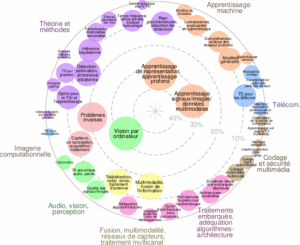
The postdoc will address theory and methods of image analysis and 3D vision applied to endoscopic images. As an endoscope is an RGB sensor, reconstructing the depth from a single image is a challenge, for which recent models have nonetheless made tremendous progress.
However, gluing these reconstructed depth data into a coherent 3D model spanning multiple images remains a largely open problem, owing to phenomena including occlusions, camera motion, and inconsistent lighting.
The postdoc will develop a computational model adapted to the 3D representation of endoscopic scenes (with inspiration taken from surface meshes, NeRF and 3DGS), a method to reconstruct it from real data images (exploiting reprojection error and depth images), and its application to real clinical problems.
These problems may include polyp mapping for tele-expertise, colon mapping for examination coverage assessment, and abdominal cavity mapping for digital twin registration of the kidney.
Responsibilities
The postdoctoral researcher will contribute to scientific research and the technical development of artificial intelligence methods within the AILE project.
Responsibilities include:
- Analysing clinical challenges related to lesion characterisation, endoscopic image quality and remote expert review, or registration between preoperative imaging and intraoperative video, anatomical structure segmentation and augmented-reality surgical guidance.
- Proposing innovative solutions based on computer vision, deep learning and video analysis.
- Contributing to the preparation, structuring, documentation and quality control of project databases.
- Developing and evaluating artificial intelligence models suited to endoscopic or surgical video streams.
- Ensuring the traceability of experiments, model versions, datasets and results.
- Contributing to scientific and technical exchanges among consortium members.
- Contributing to the production of the project’s scientific and technical deliverables.
The successful applicant will work closely with researchers and engineers from the DIA2M Department, medical teams and the consortium’s industrial partners. They will also contribute to the technical and preclinical validation of the models developed.
Candidate Profile
Required Qualifications
PhD in Computer Science, Artificial Intelligence, Computer Vision, Applied Mathematics or a related discipline.
Knowledge and Technical Skills
- Data science, particularly video-based machine learning using deep neural networks, including supervised, semi-supervised and unsupervised training on small and large datasets, adversarial training and domain adaptation.
- Data management, including data retrieval, anonymisation, formatting and storage.
- Critical analysis and the drafting and presentation of scientific results.
Experience in at least one of the following areas would be particularly valued:
- Video analysis.
- Computer vision.
- Real-time AI.
- Medical image analysis.
- Management of large medical databases.
International scientific publications, experience in deep learning, video analysis and medical data, and participation in collaborative research projects will be particularly valued.
Personal Skills
- Strong organisational skills, rigour and drive.
- Team spirit, initiative and a proactive approach.
- Strong interpersonal and communication skills.
- Ability to adapt quickly.
- Commitment to confidentiality and professional secrecy.
- Ability to work independently.
Strong written and spoken English skills are essential. English is the working language for a significant proportion of the scientific activities.
Additional Information
Our team includes French and international colleagues working in a multicultural environment.
Occasional travel may be required to attend consortium meetings, meetings with industrial partners and scientific conferences.
The successful candidate will handle sensitive or confidential medical data. They must strictly comply with the project’s requirements regarding security, confidentiality, data protection and intellectual property.
Where to apply
Applications, including a CV and cover letter, should be sent to the following email address: mmathieu1@chu-clermontferrand.fr